Welcome

NANDC is a self-governed, self-directed and independent organization empowered by the Los Angeles City Charter. This charter offers neighborhood councils a role in the City's decision-making process. We as citizens are given the opportunity and obligation to stay involved with developments in our area that affect us.  Come get involved!  After all, it's your community!

Take a few moments to find out who we are, what we do and how you can become involved.

What We Do

We promote public participation in city governance and decision making processes, to make government more responsive to our local needs and requests,  creating more opportunities to build partnerships with government and private entities to create more opportunities for our neighborhood.  We work with stakeholders to make a difference in the community with such projects as I Hablo U, the Pet Park Project, and the Community Involvement Program.


How To Get Involved

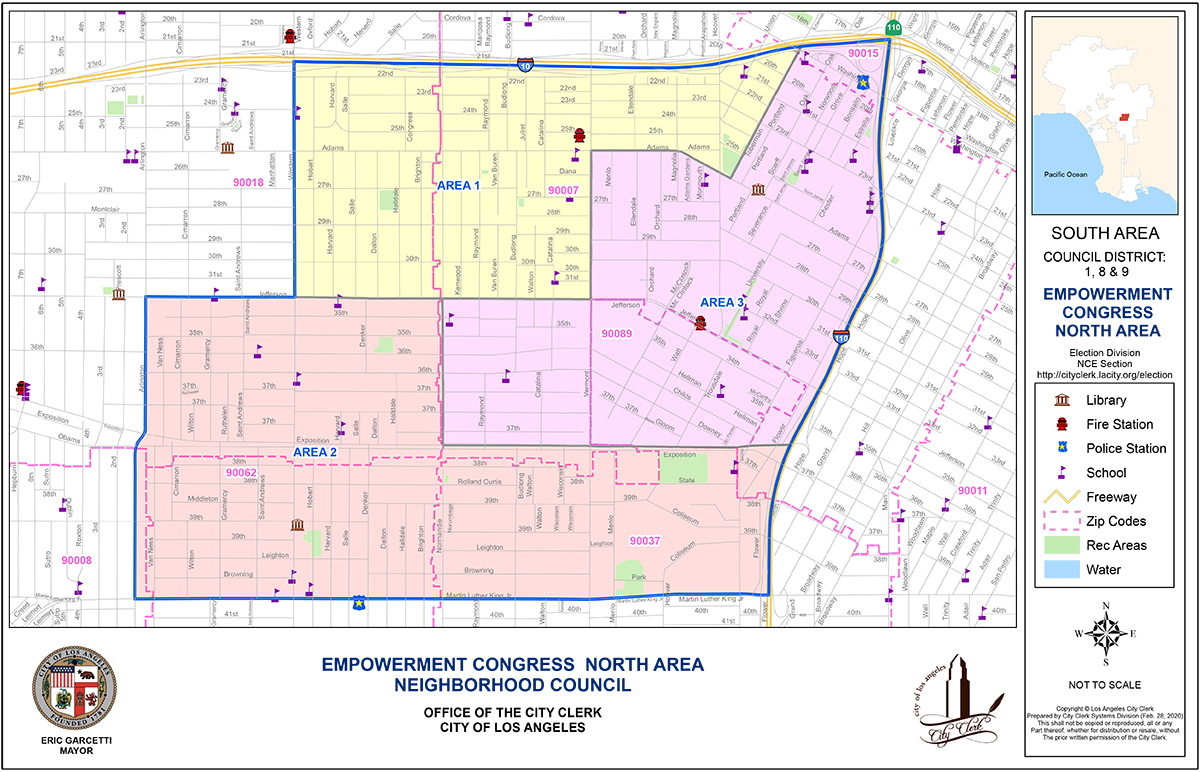
Anyone who lives, works or owns property in our boundaries is welcome to get involved. View the Boundary Map. Opportunities include:

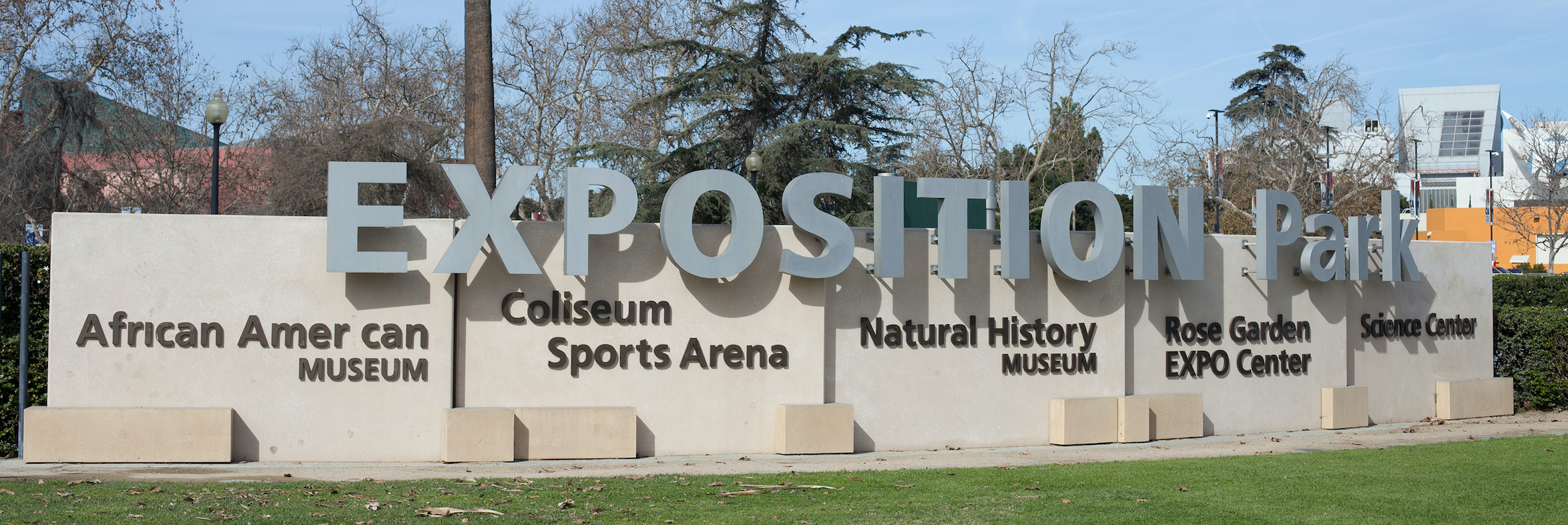
Come to a meeting! We meet First Thursday of the month from 6:30 p.m. - 9:30 p.m. in the Martin Luther King Park gymnasium, 39th and Western Avenue, the building just south of the Exposition Park Library, entrance on the south side.

Join a committee: Go to the Committee list under What We Do on the top menu

Contact a board member

Contact other elected representatives

Sign up for our newsletter on the right side of this page

Our mailing address is:
PO Box 77367
Los Angeles, CA 90007

Long Term Projects
South LA Plan

According to a Los Angeles Sentinel article about the South LA Plan from October 2008:

Areas of South Los Angeles will be receiving a badly needed facelift. The South Los Angeles Initiatives will increase affordable housing, improve and expand retail opportunities, create new jobs, and improve the education system.

“Today, united City Hall unveils a comprehensive agenda for how we can turn around South Los Angeles, project by project,” Villaraigosa said. “This five year strategic plan sets the bar high. It sets clear targets and measures for the progress of projects in ten initiative areas that will make our communities stronger. Every initiative has goals and timetables, with people specifically assigned to and responsible for meeting these initiatives. From creating good jobs and better housing to improving business and quality of life. The Council and I believe that we can no longer sit back in this time of hardship and we’re ready to push through together.”

Unemployment among African Americans in South Los Angeles is near 11%. To address that problem the South Los Angeles Initiatives proposes new business developments. Construction positions will be open to African Americans to build these new developments, and new jobs will be available in the new retail stores.

Affected developments include:

Midtown Crossing, a retail center at Pico and San Vicente.
Crenshaw Gateway, a mixed-use project at Adams and Crenshaw.
Martin Luther King, Jr. Shopping Center, a 100,000 square foot shopping center at 103rd St. and Grand Ave.
Broadway/Manchester, a 19,000 square foot shopping center at Broadway and Manchester.
Vermont/Manchester Shopping Center, a proposed 100,000 square foot shopping center at 84th Street and Vermont Avenue.
Improve the Baldwin Hills/Crenshaw Mall.
Figueroa Corridor. From the Santa Monica Freeway to King Boulevard, there will be mixed use projects.
Vermont Corridor. From the Santa Monica Freeway to King Boulevard, there will be mixed use projects.
Central Village, a 46,000 square foot retail center at 2000 S. Central Avenue.
Slauson Central Retail Plaza, an 80,000 square foot retail center.
Hoover/Manchester (Bethany Square). New construction of a mixed-use commercial/residential project consisting of five sites along Hoover Street and Manchester Avenue.
54th/Crenshaw. New construction of mixed-use project with approximately 150 residential condominiums above approximately 18,000 square of ground floor retail.

View Specific Plan Documents in City Planning

 
University Park Master Plan

About the Master Plan

USC’s University Park campus master planning process was launched in 2006 with the goal of providing a visionary framework for the physical development of the campus and the prosperity of its surrounding community in the coming years, driven by ideals expressed in the Role and Mission of the University of Southern California and in support of USC’s Plan for Increasing Academic Excellence.

Details about the USC Master Plan can be viewed on their website, including their mission, goals, potential developments and renderings.

NANDC Involvement

The Empowerment Congress North Area neighborhood Development Council (NANDC) Economic Development Committee met on March 25th, 2010 to discuss the needs of stakeholders in regards to the community benefits package to result from the USC specific plan.  At this successful forum, over 30 community members, representing long-term residences, business owners, and students came together to voice their concerns and discuss the needs of the community as a whole.  The conversation identified two topics as the major concern:  housing and jobs.

The community is looking for commitments in community benefits in various aspects of housing, examining expanding current covenants, rehab of current affordable housing units, possible new builds, an equity fund to acquire multi unit student housing to return the buildings to single family community residence as well as the need for affordable student housing from USC.

The USC specific plan brings with it job opportunity but the community is looking for a commitment in job training for these new opportunities, as well as programs to preserve local businesses and creating an alternate rehabed retail area on Vermont Ave. 

These topics were mainly discussed as a whole and the above specific programs will be further fleshed out at the next NANDC economic Development meeting on April 29th 2010.

As the Neighborhood Council in the affected area of the USC plan, we represent all stakeholders and do not carry a specific agenda, and we expect to have true and meaningful input in the community benefits package resulting from the USC specific plan.  We anticipate continued updates on the community benefits and we will be working closely with USC to be sure that the needs of our community are met.

Want to be part of the dialogue? Contact This e-mail address is being protected from spambots. You need JavaScript enabled to view it , Area 3 Representative

 
Expo Line

According to the Expo Line website, the Expo line is planned to comprise two phases. Phase I is from Downtown to Culver City. Phase II is from Culver City to the beach. Phase I is currently being built; Phase II is in engineering and design with construction to begin as soon as late 2010.

Expo Line Phase I Project Description
The Exposition Light Rail Transit Line (Expo Line) will travel along the Exposition railroad right-of-way between downtown Los Angeles and Culver City. It will share a track and two stations (7th St/Metro Center and Pico) with the Metro Blue Line as it leaves downtown Los Angeles. It will then travel along the Exposition right-of-way to the newly approved and funded aerial station at Venice/Robertson. Nine new stations will be constructed along the Expo Line route. In addition to the station at Venice/Robertson, the new stations will be located on Flower at 23rd Street and Jefferson, and on Exposition Boulevard at USC/Expo Park, Vermont, Western, Crenshaw, La Brea, and La Cienega.

The Expo Line will be approximately 8.6 miles in length and parallel the heavily congested I-10 freeway. Estimated travel time from downtown Los Angeles to Culver City is under 30 minutes with a projected ridership of 27,000 by 2020. The Expo Line project is considered a “Transit Parkway” that will be enhanced by bike and pedestrian paths, as well as trees and landscaping along the alignment.

Concerns with the Expo Line Plan
NANDC is focused on safe mass transit. With the Expo Line, the board identified safety risks with the speed, frequency and proximity of the trains to pedestrian children and elderly and passed a resolution calling for a below grade rail line. The project is planned to be at grade directly in front of two large schools without proper safety precautions at crossings.

Review the concerns

View an Environmental Justice Chart showing how the costs of the project vary by neighborhood.

NANDC supports the efforts of FixExpo.org. Their site details the efforts underway to improve the project. Among their concerns is that MTA's street-level proposal at Dorsey High School (the famous "holding pen") was rejected as UNSAFE by the CPUC over a year ago, MTA has brought back the street-level holding pen proposal and added a station.  Now MTA is requesting the CPUC rubber-stamp the unsafe proposal.

This holding pen-street-level station design is being pushed by Mayor Antonio Villaraigosa, Westside County Supervisor Zev Yaroslavsky and local council members Herb Wesson, Bernard Parks and Jan Perry.  Instead of heeding to the warnings of international rail safety experts and appropriating the resources to build a Dorsey HS grade separation (a train under-crossing like MTA has built at Figueroa by USC, or a train over-crossing like MTA is building in Culver City), Villaraigosa, Yaroslavsky, Wesson, Parks and Perry are hell bent on seeing Dorsey High School students corralled into a holding pen like cattle or inmates in a prison, while 225-ton trains pass by their noses. Follow them on Facebook or Twitter.

Need PDFs of all the documents you want to link to.


Our Name

The early Eighth District Empowerment Congress, created by now Supervisor Mark Ridley-Thomas was a community-based education and mobilization program. It has been acknowledged as the model for the Los Angeles citywide neighborhood council system created by the change City Charter.

We still proudly carry the early moniker in our name as the 'Empowerment Congress North Area Neighborhood Development Council'.  You may call us NANDC for short!

Our Community

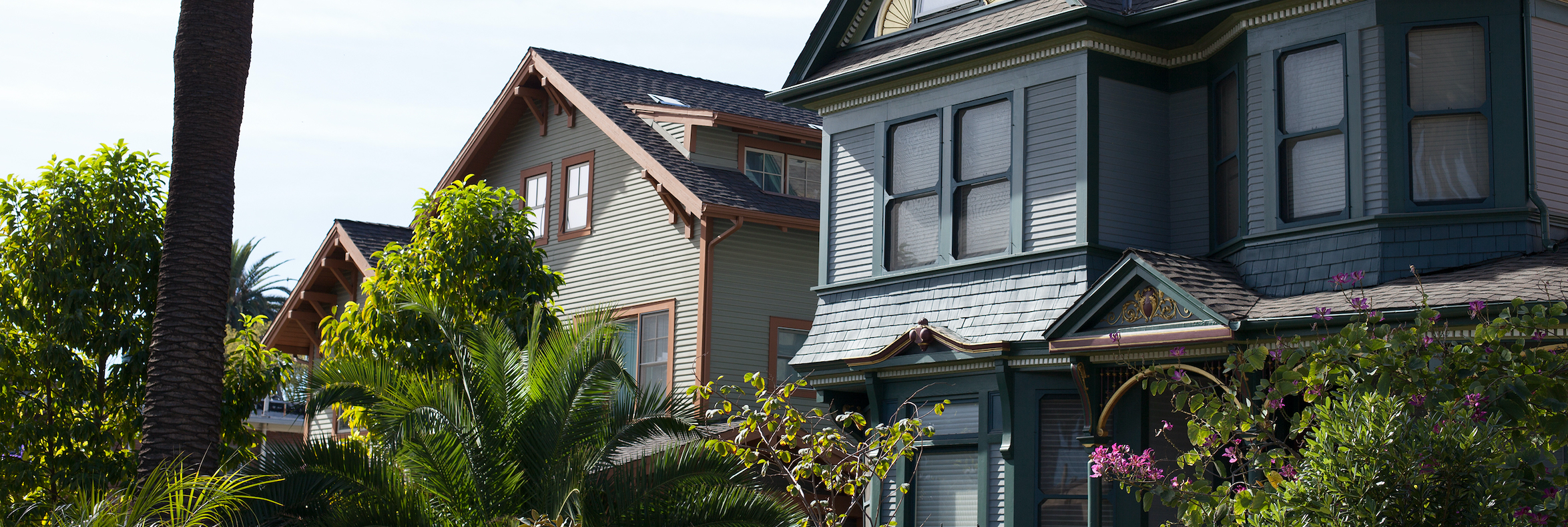
NANDC is located in West Adams, one of the oldest neighborhoods in Los Angeles, with most of its buildings erected between 1880 and 1925. It was once the wealthiest district in the city, with its Victorian mansions and sturdy Craftsman bungalows home to Downtown businessmen and professors and academicians at USC. In the 1990s, three areas of West Adams were designated as Historic Preservation Overlay Zones by the city of Los Angeles, in recognition of their outstanding architectural heritage.